
Credit for solar energy: how the available lines of credit work
O credit for solar energy It has become the main financing tool for Brazilian families and businesses seeking to reduce costs on their electricity bills.
The energy transition in Brazil is advancing at an accelerated pace, driven by increasingly accessible and structured financing options.
In this comprehensive article, you will understand exactly how access to these resources works and what the most advantageous options are on the current market. Check out the key points we will cover below:
- Mechanisms and basic operation of solar credit lines.
- Key bank and public financing options in 2026
- Technical and financial requirements for project approval.
- Practical comparison of rates, terms and payment conditions.
- Complete step-by-step guide to applying for your financing without errors.
What is solar energy credit and how does it work?
Photovoltaic financing works like a targeted loan, where the amount granted covers the purchase of equipment and the complete installation of the system.
The installed equipment itself is often used as collateral for the banking transaction.
The main advantage of this format lies in the financial return.
In most simulations, the amount saved monthly on the electricity bill is enough to cover the mortgage or commercial loan payment.
In this way, the consumer replaces a fixed daily expense with an investment in their own asset.
Upon repayment of the financed amount, the savings generated by the power plant are fully returned to the family's or company's coffers.
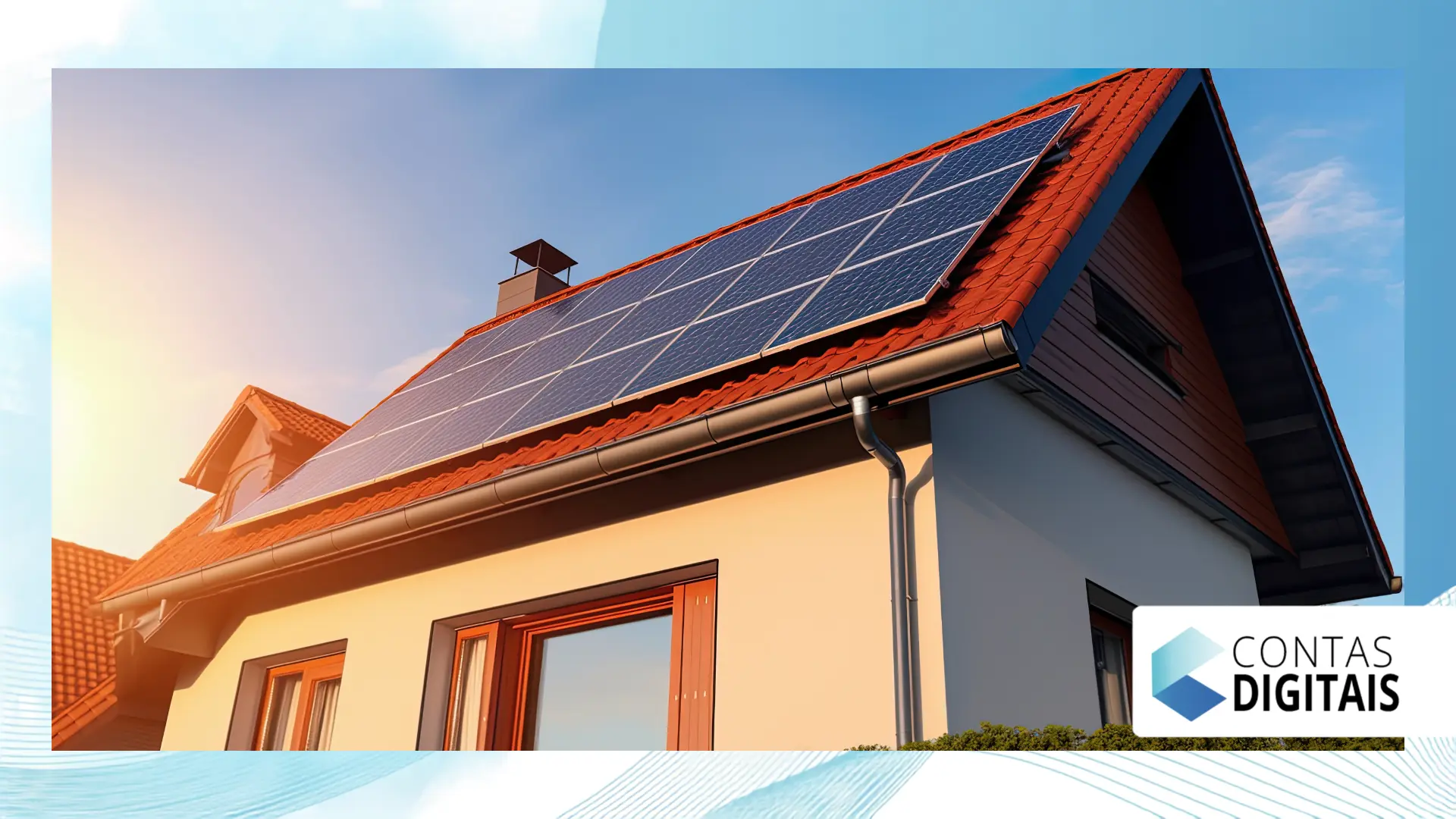
Key credit lines for solar energy available in 2026
The Brazilian market offers diverse options for raising funds for photovoltaic projects, varying according to the client's profile and the region of installation.
The options are divided into public banks, private banks, and cooperatives.
++ Available credit limit: how to calculate it before taking out a loan.
Public Bank Lines of Credit and Constitutional Funds
Public banks offer subsidized rates from regional development funds, making financing extremely attractive for individuals, farmers, and small to large businesses.
- Northeast Constitutional Fund (FNE of the Bank of the Northeast): It serves residential and commercial projects in the Northeast region with long repayment terms and extended grace periods.
- Constitutional Fund of the Central-West Region (FCO of Banco do Brasil): Focused on regional development, it finances photovoltaic systems for the rural, commercial, and industrial sectors.
- BNDES Finame Renewable Energy: A national line of credit focused on financing domestically produced equipment, primarily serving legal entities and rural producers with competitive rates.
Lines of Credit from Private Banks and Credit Unions
Private financial institutions and cooperatives have improved their digital approval processes. They offer speed in the loan approval process, focusing on simplicity of contracting.
- Santander, Bradesco and Itaú: They have specific portfolios for energy transition, covering up to 100% of the project, including equipment and specialized labor.
- Sicredi and Sicoob: Credit cooperatives stand out for their regionalized service and personalized rates for members, with repayment terms of up to 84 months.
Who can apply for photovoltaic financing?
The request of the credit for solar energy It is available to individuals, sole proprietors, corporations, rural producers, and residential or commercial condominiums throughout the country.
Find out more: How to compare loan offers without falling into traps.
Credit approval fundamentally depends on two joint analyses: the applicant's financial capacity and the technical feasibility of the photovoltaic project presented by the responsible integrating company.
Comparative table: Credit lines available on the market
Choosing the ideal loan option depends on the applicant's profile, the interest rate charged, and the terms offered by each financial institution operating in the energy sector.
| Institution / Line | Target Audience | Maximum Term | Shortage | Project Coverage |
| Bank of Brazil (FCO) | Companies and Rural Producers | Up to 120 months | Up to 24 months | Up to 100% of equipment and installation |
| Northeast Bank (FNE Sol) | Individuals, Legal Entities, and Rural Producers | Up to 96 months | Up to 12 months | Up to 100% of the total invested value |
| BNDES Finame | Legal Entities and Agribusiness | Up to 120 months | Up to 24 months | Systems registered with BNDES |
| Private Banks (General) | Individuals and Legal Entities | Up to 72 months | Up to 120 days | Up to 100% (depends on the customer's score) |
| Cooperatives (Sicredi/Sicoob) | Individual, Corporate, and Agribusiness Associates | Up to 84 months | Up to 180 days | Complete projects with installation. |
Requirements for having your loan approved.
Financial institutions require specific documentation to verify the viability of a financial transaction. Submitting the correct documents speeds up the analysis and release of bank funds.
Personal or Business Documentation
For individuals, the following documents are required: identity document, CPF (Brazilian tax identification number), current proof of address, and proof of recent income. For legal entities, the articles of incorporation, balance sheets, and revenue statements for the last few months are necessary.
Project Technical Documentation
The bank requires a detailed budget from the integrating company, containing the specifications of the solar modules and inverters.
Equipment registered with Inmetro and official data from National Electric Energy Agency (ANEEL) They guarantee technical compliance.
Step-by-step guide to applying for your financing.
Get the credit for solar energy It requires the fulfillment of well-defined steps between the installation company, the client, and the financial institution chosen for the transaction.
Budget and Feasibility Study: The integrator analyzes the recent electricity bill and prepares a customized technical proposal tailored to the property's consumption needs.
++ Pix Key: How to check all keys linked to a CPF (Brazilian tax ID)?
Financing Simulation: The financial proposal is submitted to the bank for verification of terms, interest rates, and the exact amount of monthly installments.
Credit Analysis: The bank conducts a background check on the applicant, assessing their ability to pay and any restrictions registered with credit protection agencies.
Technical Inspection and Approval: The institution analyzes the technical data of the equipment and approves the issuance of the Bank Credit Note for signature.
Installation and Resource Release: The company assembles the system, and the bank makes the payment directly to the supplier registered in the project.
Main advantages of financing a photovoltaic system.
Financing a solar system brings immediate benefits to cash flow, allowing savings on electricity bills to pay for the investment without affecting working capital.
Capital Preservation: There is no need to use emergency financial reserves to purchase and install the equipment.
Protection Against Fees: The consumer protects their budget against annual adjustments and tariff flags imposed by electricity distributors.
Property Appreciation: Properties with their own power generation capabilities experience an immediate increase in value in the commercial and residential real estate market.
Active Sustainability: The adoption of credit for solar energy It accelerates the reduction of carbon emissions by promoting practices aligned with modern socio-environmental guidelines.
How do I choose the best option for my profile?
The search for the best line of credit requires comparing the Total Effective Cost (TEC) of the transaction, and not just the nominal interest rate advertised by the financial institution.
Consider the credit opening fees, mandatory insurance, and bank fees included in the contract. Analyze whether the grace period meets the time required for approval by the distributor.
Assess the installation company's reputation in the market. Experienced integrators have established partnerships with banks, streamlining the financing process and ensuring technical support from state regulatory bodies.
Is it worth applying for a solar energy loan today?
Given the current tariffs and incentives for energy transition in Brazil, the answer is positive. The immediate savings obtained offset the cost of raising financial resources.
Additionally, the sustainability indicators monitored by Ministry of Mines and Energy (MME) They confirm the consolidated progress of the clean energy matrix in the country, reinforcing the operational security of the financial sector.
By choosing the right line of credit, consumers transform an unavoidable and ongoing expense into a sustainable, profitable, and long-lasting asset for their property.
Frequently Asked Questions
Can I finance 100% of the solar energy project value?
Yes. Most financial institutions offer lines of credit that cover 100% of the costs, including the purchase of panels, inverters, mounting structures, and installation services.
What happens if the installment amount is greater than the savings?
The ideal project structure aims to match the installment payment to the savings generated. If the installment payment is higher, the difference represents the residual cost for acquiring the asset.
What is the average approval time for solar credit?
In private banks and cooperatives, the credit check takes 24 to 48 hours. In public banks with constitutional funds, the process can take between 15 and 30 days.
Is it possible to amortize or pay off the loan early?
Yes. The Consumer Protection Code guarantees the right to full or partial early settlement of the contract, with a proportional deduction of future interest charged by the institution.
++ Solar energy financing: a guide to lines of credit and banks for integrators in 2026.
++ Financing for solar energy: see options and advantages.
