
Decentralized identity: a trend for digital services
THE decentralized identity It transforms the way we manage personal data in the digital environment, giving users full control over their sensitive information and login credentials.
The growth of cyber fraud and stricter regulations are driving this modern architecture.
Innovative businesses are adopting this standard to increase security and optimize authentication experiences.
In this specialized article, you will understand the fundamentals of this disruptive technology, its operational advantages, practical applications in industry, and the challenges to its widespread adoption.
- Fundamental concepts and operation of Decentralized Identifiers (DIDs).
- Key benefits for businesses and users in the digital ecosystem.
- Technical comparison between traditional models and the self-sovereignty approach.
- Practical examples and frequently asked questions about implementing this solution.
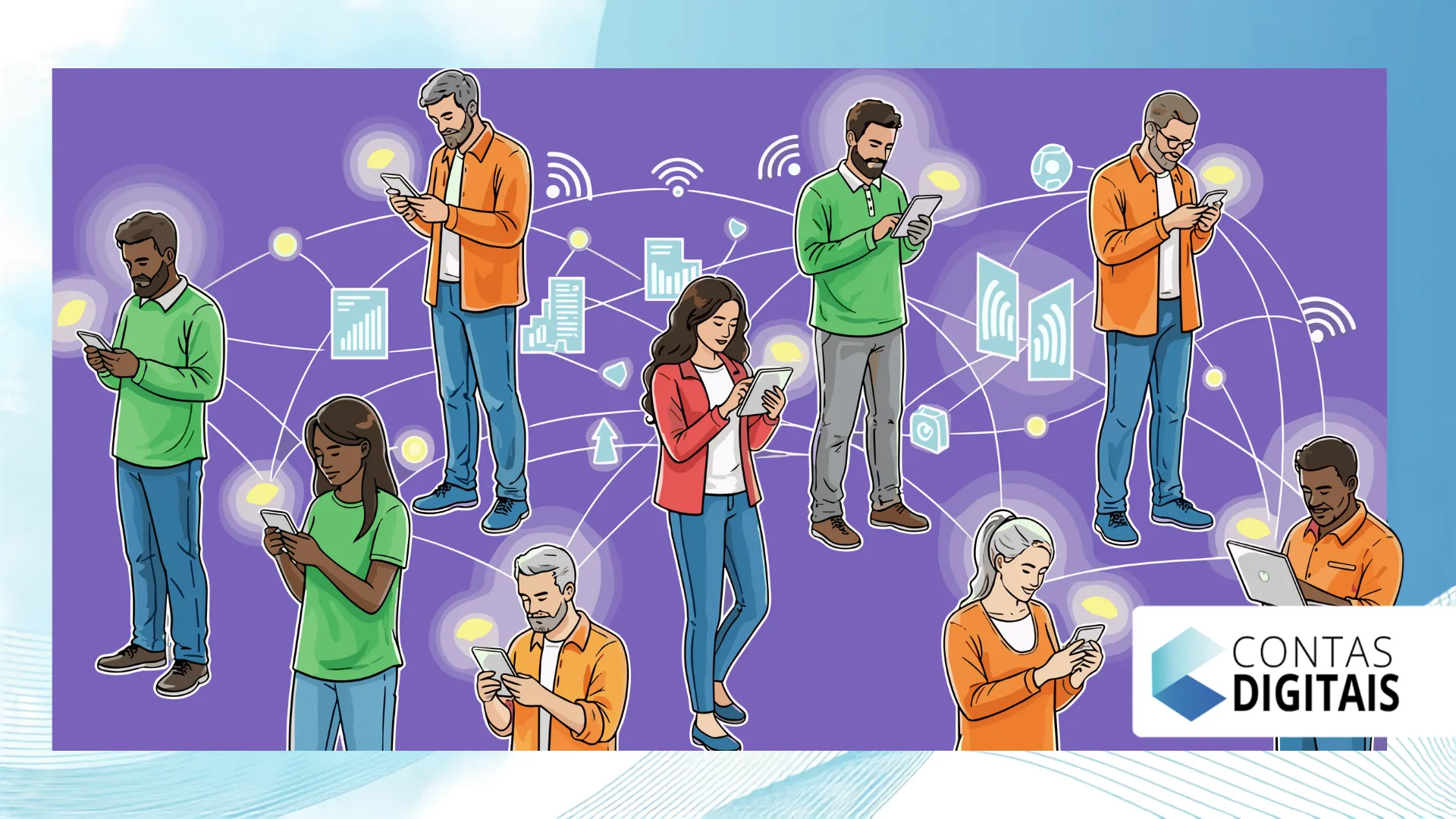
What is decentralized identity and how does it work?
THE decentralized identity It consists of a model where the individual owns, manages, and shares their own data without relying on central authorities or legacy identity providers.
This architecture uses public-key cryptography and distributed networks to validate personal information.
The user stores verifiable credentials in a digital wallet directly on their mobile device.
In practice, the system connects three main actors in the ecosystem: the credential issuer, the data holder, and the verifier that validates authenticity via immutable records.
The technical pillars: DIDs and Verifiable Credentials
Decentralized Identifiers represent unique network addresses generated without intermediaries.
They enable secure and private connections between two parties without exposing sensitive centralized records to third parties.
Verifiable Credentials, on the other hand, function as encrypted digital versions of physical documents.
They contain irrefutable mathematical proofs issued by official bodies and companies previously validated in the system.
The W3C Consortium established the official standard for decentralized identifiers at W3C, consolidating a global specification that ensures technical interoperability between different modern platforms and services.
Why migrate to decentralized identity management?
Traditional platforms store millions of records on servers exposed to constant attacks.
This excessive centralization transforms corporate databases into extremely lucrative targets for cybercriminals.
By adopting the decentralized identity, Organizations eliminate the unnecessary storage of sensitive data.
This change drastically reduces operational risks and the costs of strict legal compliance.
For consumers, the experience eliminates complex passwords and repetitive registration processes.
++ What is “emotional technology” and why is it trending?
The user shares only the data strictly necessary to complete the desired transaction.
Comparison: Traditional Identity vs. Decentralized Identity
The table below summarizes the main structural differences between the legacy centralized architecture and the privacy-focused decentralized model:
| Feature | Traditional (Centralized) Model | Decentralized Model (SSI) |
| Data Control | Company/provider servers | User-exclusive on the device |
| Single Point of Failure | High risk of massive leaks | Mitigated by distributed architecture |
| Privacy | Tracking between services | Minimal and selective sharing |
| Authentication Standards | Federated passwords and tokens | Asymmetric cryptography and DIDs |
| Cost of Compliance | High (PII storage) | Reduced (non-custodial validation) |
The technological transition simplifies digital governance and strengthens alignment with global data protection legislation, redefining the standards of commercial trust in the online environment.
Read more: Job opportunities in the technology sector: areas with the highest demand
Practical use cases in digital services
In the financial sector, the decentralized identity It speeds up the registration validation and customer onboarding process.
Institutions confirm KYC information in seconds with a full guarantee of integrity.
In the healthcare field, patients securely share medical histories, test results, and prescriptions with hospitals and clinics.
Full control over access remains with the citizen.
Modern governments are implementing digital passports and driver's licenses based on these open standards.
++ Cornell Note-Taking: How to Use the Technique to Study Better
Instant verification reduces bureaucracy and fraud in the provision of essential public services.
Challenges to mass adoption and market trends
Despite their high potential, the usability of digital wallets still represents a barrier to entry.
The user experience needs to evolve to simplify the management of cryptographic keys.
Interoperability between competing ecosystems also requires continuous standardization.
Companies and governments need to align technical standards to ensure the universal acceptance of these credentials in the coming years.
Reports from the World Economic Forum indicate that... digital identity architecture, This will reshape global economic interactions, making data security an indispensable strategic pillar.
The role of the data ecosystem in digital security.
The adoption of decentralized identity It minimizes the exposure of vital corporate information, protecting strategic assets against ongoing leaks and reducing critical structural vulnerabilities in integrated systems of the digital ecosystem.
Autonomous systems validate specific permissions instantly without storing sensitive credentials on vulnerable central servers, creating a robust barrier against unauthorized access by malicious external agents.
In doing so, companies strengthen consumer trust, automate complex operational checks, and ensure the cyber resilience needed to support the secure expansion of modern services.
Impact on transforming the customer experience.
The use of decentralized identity It eliminates friction in accessing corporate portals, allowing clients to log in instantly with complete autonomy without needing to reset forgotten passwords.
Consumers gain complete transparency about which personal attributes they share in each commercial interaction, promoting more ethical, personalized relationships aligned with global privacy expectations.
This fluidity reduces abandonment in digital hiring journeys, increasing operational conversion rates and consolidating a sustainable competitive advantage for organizations oriented towards the technological future.
Conclusion
THE decentralized identity It is reshaping digital relationships by prioritizing individual privacy and cybersecurity.
This innovation lays a solid foundation for a more reliable connected economy.
Organizations that lead this transformation will gain significant competitive advantages in the market.
Investing in this architecture means protecting assets, simplifying processes, and building lasting relationships with clients.
Frequently Asked Questions
What happens if a user loses their mobile device?
Digital wallets have advanced mechanisms for social recovery or encrypted backup.
The user retrieves their credentials using trusted browsers without exposing their private keys to third parties.
How to decentralized identity Does it support compliance with the LGPD?
By eliminating centralized storage of personal information, companies minimize the exposure of sensitive data.
The system ensures the principle of minimization required by current regulatory standards.
Is blockchain technology mandatory to use this solution?
Not necessarily. While distributed networks are common for anchoring public keys, the architecture allows the use of other immutable ledgers and decentralized servers for credential validation.
Which companies are already using verifiable credentials today?
Large technology corporations, global banking networks, and educational institutions are already issuing diplomas and digital IDs based on international standards developed for self-sovereign identity ecosystems.
++ Decentralized identity: the key to the digital age?
++ Decentralized Digital Identity advances as a new layer of trust for digital services.
