
Sustainable urban agriculture businesses in 2026: how to get started now
Sustainable urban agriculture businesses in 2026 They don't just appear out of nowhere.
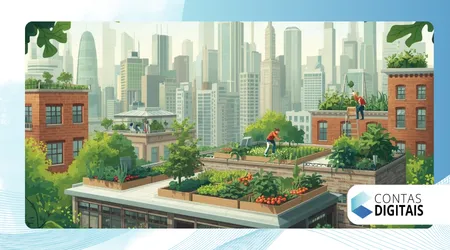
They appear precisely now, when the cost of tomatoes at the supermarket hurts our wallets and the asphalt of big cities seems increasingly hostile to the simple idea of growing food close to home.
It's as if the city, after years of swallowing up fertile land, is starting to cry out for help in return.
And those who understand this in time transform idle space into real income, with rapid cycles and an impact that goes beyond profit.
Keep reading!
Summary
- What are Sustainable urban agriculture businesses in 2026?
- Why invest in Sustainable urban agriculture businesses in 2026 Does it make as much sense today?
- How to get started Sustainable urban agriculture businesses in 2026 Without stumbling at the beginning?
- What technologies are truly game-changers in these businesses?
- What concrete advantages does nobody really talk about? Sustainable urban agriculture businesses in 2026?
- Examples that show this is already happening
- Frequently asked questions about Sustainable urban agriculture businesses 2026
What are Sustainable urban agriculture businesses in 2026?
Business Sustainable urban agriculture by 2026 These are operations that produce food within or on the edge of cities, using vertical space, recirculated water, and smart energy.
It's not just a balcony garden for personal consumption.
It's a model that generates revenue, closes cycles, and meets the demand of those who want to know exactly where their food comes from.
What defines these businesses now is true circularity. Waste becomes nutrients, water returns to the system, LED light adjusts its spectrum according to the plant's needs.
In 2026, those who operate this way are not "being sustainable." They are being practical.
In Brazil, with 85% of the population living in cities, this ceases to be a romantic idea and becomes a direct response to the food insecurity that is knocking on the door of millions of families.
++ Entrepreneurship without Partners: Business Models that Allow You to Grow Alone in Brazil
Why invest in sustainable agriculture businesses Does it make as much sense today?
The global urban agriculture market will grow from US$173.18 billion in 2025 to US$185.7 billion in 2026, representing a growth of 7.21 times the rate, according to a report by The Business Research Company.
A stark number, but one that hides a bigger story: cities are growing, arable land is shrinking, and consumers are tired of paying high prices for paper that traveled more than they did on vacation.
Here in Brazil, the National Urban and Peri-urban Agriculture Program, updated in 2023, connects ministries, maps areas, and opens doors for training and commercialization.
Those entering the market now don't need to reinvent the wheel. There are public notices, green credit lines, and even preferential treatment in public procurement.
There's something unsettling about all this: while traditional agriculture suffers from drought and high input costs, urban areas become havens of stable production.
The customer pays more for freshness and the short time between planting and consumption. Profit margins are created there, almost effortlessly.
Have you ever stopped to imagine that part of the solution to expensive food in big cities might literally be right above your garage?
++ Flexible Graduation 2026: Microcredentials and Modular Career Paths
How to get started sustainable urban agriculture businesses?
Start ridiculously small. Choose herbs, microgreens, or leafy greens that will be ready to harvest in 25 days. Test them in your backyard or on a borrowed rooftop.
The classic mistake is investing ten thousand reais in infrastructure before selling the first pack.
Next, check your city's law. In Curitiba, Law 16.646/2025 opened doors that were previously locked — valley bottoms and areas that were previously prohibited can now become production sites.
Consult the city hall. It's not annoying bureaucracy, it's a treasure map.
Finally, sell before producing on a large scale. Neighborhood fair, neighborhood WhatsApp group, weekly baskets. Cash flow from month one changes everything.
Many people plant beautiful plants and fail because they forgot that customers don't magically appear.
What technologies are truly game-changers in these businesses?
Hydroponics, aeroponics, and aquaponics are no longer just student experiments. They are tools that cut water usage by up to 95% and allow for year-round production, regardless of the outside weather.
Inexpensive sensors connected to your cell phone warn you when the pH is out of balance or the light needs adjusting. Tuned spectrum LED reduces energy bill by up to 40%.
What once required an engineer can now be budgeted for someone starting out on their own.
The secret isn't having the most expensive equipment.
It's about choosing what solves the specific problem of your space. Some people scale things up with a simple system of shelves and an aquarium pump.
Others require full automation. Both can work — as long as the sales model keeps up.
What concrete advantages does nobody really talk about? Sustainable urban agriculture businesses in 2026?
Proximity to the customer shortens the supply chain and inflates profit margins in an almost indecent way. The restaurant receives freshly harvested leaves in the morning and pays a premium for them.
You avoid intermediaries and still build a direct relationship.
Another advantage that few people see: resilience. While the field prays for neither too much nor too little rain, the controlled system simply continues.
Drought in the Northeast? Production continues. Torrential rain in São Paulo? Same thing.
There is also the social benefit that becomes a brand asset. Local job creation, environmental education, neighborhood strengthening.
Sustainable urban agriculture businesses 2026 They function like a healthy circulatory system in the city: the "blood" (resources) circulates quickly, without waste, nourishing organs (neighborhoods) that previously depended on distant and expensive supplies.
Examples that show this is already happening
EVA Urban Agriculture, in Curitiba, was born from the idea of Lorenzo Mesadri, an agricultural engineer who grew tired of seeing wasted potential.
It started with smart gardens made from recycled materials and today it has the EVA Baby model — a compact garden that works for up to 21 days without direct sunlight.
In 2025, they installed the 209th garden at Pinhão Hub and serve institutions that care for children and the elderly. They sell produce, offer workshops, and provide consulting services.
They show that purpose and a positive financial situation can go hand in hand.
In São Paulo and Rio, entrepreneurs are transforming abandoned warehouses into hydroponic vertical farms that deliver to restaurants in less than 24 hours.
They cultivate tropical species year-round, with 90% less water and a margin above 40% in premium products.
They don't copy foreign models. They adapt them. And the market benefits from it.
Comparative table of urban farming methods
| Method | Water usage | Space required | Average cycle | Approximate initial investment | Suitable for |
|---|---|---|---|---|---|
| Traditional hydroponics | 90% less | Medium (shelves) | 30-45 days | R$ 8,000–25,000 | Beginners in slab construction |
| Aeroponics | 95% less | Down (vertical) | 25-35 days | R$ 15,000–40,000 | Commercial scale |
| Aquaponics | 85% less | Medium-high | 40-60 days | R$ 12,000–35,000 | Who wants to integrate fish? |
| Community mandala garden | 70% less | Low | Variable | R$ 2.000–6.000 | Neighborhoods and associations |
Frequently asked questions about Sustainable urban agriculture businesses 2026
| Question | Response |
|---|---|
| How much does it really cost to get started? | From R$ 3,000 to R$ 15,000 for a viable initial project. Possible return in 4 to 8 months with direct sales. |
| Do I need a large plot of land? | No. Many start with a 20 m² slab or garage. Vertical construction solves that. |
| Is it possible to live solely off of this? | Yes, but most start as extra income and scale up after validating the local market. |
| What is the biggest risk? | Producing beautiful products doesn't guarantee sales. Sales planning is more important than technique. |
| Does it have government support? | Yes. The National Urban Agriculture Program offers training and networking opportunities. Also look for municipal funding opportunities. |
| Does it work in an apartment? | Perfect. Compact models fit on a balcony or even in a living room. |
Sustainable urban agriculture businesses in 2026 These are not Instagram trends.
These are mature responses to problems we are already experiencing: expensive food, hot cities, the desire to reconnect.
If you have some spare space, an idea in mind, and the willingness to start small, the timing couldn't be better than now.
Plant today. Harvest tomorrow. And who knows, maybe you'll feed an entire city later.
To go deeper:
- Urban Farming Global Market Report 2026
- National Program for Urban and Peri-urban Agriculture
- Law 16.646/2025 – Modernization of urban agriculture in Curitiba
