
How to use Pix Installments as a credit alternative for small businesses
How to use Pix Installments as a credit alternative!
In an economic climate where small businesses face constant challenges attracting customers and managing cash flow, Pix Parcelado emerges as an innovative tool.
Recently launched by the Central Bank of Brazil, it allows entrepreneurs to offer flexible payment options without relying exclusively on credit cards or traditional financing.
This modality not only democratizes access to credit, but also strengthens the competitiveness of micro and small businesses, allowing them to adapt to the demands of modern consumers.
Keep reading!
How to use Pix Installments as a credit alternative: Summary of Topics Covered
- What is Pix Installments? – An overview of this new feature.
- How does Pix Installment work for small businesses? – Operational details and practical integration.
- What are the advantages of using Pix Installments as a credit alternative? – Benefits argued with examples and data.
- Why is Pix Installments a good option for small businesses compared to other forms of credit? – Comparative and argumentative analysis.
- How to implement Pix Installments in your small business? – Practical steps and strategic considerations.
- What are the risks involved in using Pix Installments and how can I mitigate them? – Realistic approach to avoid pitfalls.
- Frequently Asked Questions about Pix Installments for Small Businesses – Answers in table format for quick clarifications.
See also: The Longevity Market: Businesses that Take Advantage of Brazil's Aging Population
What is Pix Installments?
Pix Parcelado represents an evolution of the instant payments system in Brazil, allowing transactions to be divided into installments while the recipient receives the full amount immediately.
Unlike conventional Pix, which is paid in cash, this modality incorporates credit elements, where the payer assumes interest and conditions defined by the financial institution.
Thus, it positions itself as a bridge between the immediacy of Pix and the flexibility of traditional loans, without the need for physical cards.
Additionally, Pix Parcelado was designed to expand access to credit, especially for those who do not have high credit card limits or a robust banking history.
For example, imagine a consumer who needs to purchase an essential product but doesn't have the funds immediately. With this tool, they can pay in installments directly via a banking app, transferring the amount to the seller in real time.
++ How digital accounts handle security: fraudulent PIX and card cloning
However, it's crucial to understand that interest is applied to the payer, not the recipient, making it an attractive option for businesses looking to avoid discounts or late payments.
Therefore, this innovation reflects a larger trend towards financial digitalization in the country, where the Central Bank seeks to reduce barriers to inclusion.
In fact, with Pix already adopted by 93% of the Brazilian adult population in 2025, according to data from the Bank
Central, Parcelado emerges as a natural complement, promoting safer and faster transactions.
So, for small businesses, it's not just a payment method, but a strategy to build customer loyalty among those who value personalized options.
How does Pix Installment work for small businesses?
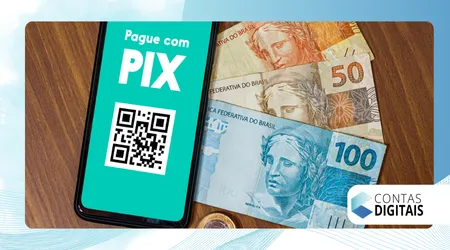
Pix Parcelado operates integrated with the Pix ecosystem, where the customer initiates the transaction via QR Code or the seller's Pix key, choosing the number of installments and accepting the interest terms proposed by their bank.
In this process, the seller receives the full amount instantly, while the payer's bank manages the installment plan as a pre-approved line of credit.
++ Fintechs offer faster credit: advantages, risks, and what to watch out for
Consequently, this eliminates the wait for external approvals, speeding up sales closing.
Furthermore, for a small business, integration can be done through payment platforms or banking apps that support the functionality, without requiring heavy investments in technology.
For example, by generating a dynamic QR Code, the entrepreneur allows the customer to view installment options directly on their cell phone, making the experience fluid and modern.
However, it is essential that the business check compatibility with its financial institution, as not all banks offer competitive rates or wide limits.
Therefore, the operational flow emphasizes simplicity: the payer confirms the transaction, the bank debits the first installment and schedules subsequent ones, while the seller confirms immediate receipt.
This not only optimizes working capital but also reduces the risk of default for the entrepreneur, as the bank assumes the burden of credit.
In fact, in scenarios of high inflation or economic instability, this mechanism becomes a differentiator, allowing smaller businesses to compete with large retailers.
What are the advantages of using Pix Installments as a credit alternative?
One of the main advantages is the reduction of operational costs for small businesses, as it eliminates high intermediation fees associated with credit cards, which can reach 3-5% per transaction.
Instead, with Pix Installments, the seller receives the full amount without discounts, passing the interest on to the buyer.
Consequently, this improves profit margins and encourages higher sales, as customers feel more comfortable investing in high-value products.
Furthermore, the modality promotes financial inclusion, allowing entrepreneurs to reach unbanked or credit-limited audiences.
For example, consider a small artisanal bakery in a peripheral neighborhood: by offering Pix Parcelado (Payment Plan), the owner allows customers to pay in installments for customized cakes for parties, increasing the average ticket by 30% without relying on external financing.
However, this benefit goes beyond the immediate, fostering long-term relationships with consumers who value flexibility.
Therefore, another key benefit is the speed of transactions, which can convert hesitations into impulsive purchases.
Thus, in a saturated market, where competition is fierce, adopting this tool positions the business as innovative and customer-centric.
Indeed, statistics from the Central Bank indicate that Pix already processed almost 280 million transactions in a single day in June 2025, suggesting that Parcelado can scale quickly, boosting sales volume for smaller players.
Why is Pix Installments a good option for small businesses compared to other forms of credit?
Compared to a traditional credit card, Pix Installments offers greater control to the seller, who doesn't face the risk of chargebacks or delays in payments.
While cards involve operators that charge fixed and variable fees, Parcelado transfers credit management to the payer's bank, freeing the entrepreneur to focus on their core business.
Consequently, this is particularly advantageous for seasonal businesses, such as a craft store that sees peaks around holidays.
Furthermore, unlike conventional bank loans, which require bureaucracy and collateral, Pix Parcelado is instant and accessible via mobile, democratizing credit for microbusinesses.
For example, a self-employed mechanic can offer vehicle repairs in up to 12 installments, without the need for a formal financing contract – something unthinkable in traditional models.
However, this simplicity argues for strategic adoption as it reduces barriers to entry for new customers.
Therefore, in a context of high national default rates, Pix Installments minimizes risk exposure, as the bank assesses the payer's credit in real time.
So why settle for outdated options when a tool like this can transform your cash flow?
This rhetorical question leads us to reflect on financial evolution: Installment payments are not just an alternative, but a necessity for competitive survival.
How to implement Pix Installments in your small business?
To implement Pix Installments, the first step involves verifying whether your financial institution offers the functionality and integrating it into your existing sales system, such as a digital POS or e-commerce.
Then, train your team to explain the options to customers, emphasizing transparency on interest rates to avoid misunderstandings.
Consequently, this not only facilitates adoption but also builds trust, which is essential for retention.
Additionally, use tools like custom QR Code generators to promote the modality on social media or at physical locations, attracting qualified traffic.
For example, a local florist could create seasonal campaigns, such as “Pay your Mother's Day flowers in installments via Pix,” integrating direct payment links.
However, monitor the rates offered by banks, opting for partnerships that minimize indirect costs.
Therefore, evaluate the initial impact through metrics such as increased sales volume and customer feedback, adjusting strategies as necessary.
Thus, implementation becomes an iterative process, where the business evolves along with the tool.
In fact, similar to a gear lubricating a rusty machine, Pix Parcelado smooths financial transactions, allowing small entrepreneurs to operate more efficiently in a volatile market.
What are the risks involved in using Pix Installments and how can I mitigate them?
A prominent risk is over-reliance on this modality, which can mask cash flow problems if customers opt for long installments, affecting financial projections.
Additionally, there is the potential for payer default, although the bank manages this, which could indirectly impact the business's reputation if transactions are disputed.
Therefore, it is vital to diversify payment options so as not to concentrate everything in one tool.
However, mitigating these risks involves ongoing customer education on terms and conditions and promoting responsible use.
For example, a beauty salon could include clear clauses on digital receipts, explaining that the installment plan is managed by the customer's bank.
This prevents disputes and strengthens the ethical image of the business.
Therefore, another smart approach is to integrate data analytics to monitor usage patterns, adjusting offers based on the audience profile.
In fact, by treating risks as learning opportunities, the entrepreneur transforms potential weaknesses into competitive strengths, ensuring long-term sustainability.
Here's a comparison table between Pix Installments and other forms of credit to illustrate key differences:
| Aspect | Pix Installments | Credit card | Bank loan |
|---|---|---|---|
| Receiving Time | Snapshot for the seller | Up to 30 days with fees | Depends on approval, days or weeks |
| Seller Fees | No direct | 2-5% per transaction | High, with bureaucracy |
| Access to Credit | Via banking app, fast | Pre-approved limit | Rigorous credit analysis |
| Default Risk | Assumed by the payer's bank | Chargeback possible | High for the taker |
| Flexibility | Installments currently defined | Revolving or installment | Fixed, with contracts |
This table highlights how Pix Parcelado offers a balance between speed and cost, ideal for small businesses.
How to use Pix Installments as a credit alternative: Frequently Asked Questions
To clarify common points, I present a table with frequently asked questions, based on real queries from entrepreneurs:
| Question | Response |
|---|---|
| Does Pix Installment have a maximum value limit? | Yes, it depends on the payer's bank, generally aligned with available credit, but can vary from R$ 100 to R$ 50,000 per transaction. |
| How does the seller receive the receipt? | Via instant notification in the app or bank statement, similar to conventional Pix. |
| Are there any extra costs for the business when offering? | No, the seller does not pay fees; interest is charged only to the payer. |
| Is it possible to cancel an installment transaction? | Yes, but it follows bank rules, with possible proportional refund. |
| What is the difference between Automatic Pix and Automatic Pix? | Installments are for one-off payments, while Automatic is recurring, like subscriptions. |
| Do small businesses need a CNPJ to use it? | Not necessarily, but it is recommended for professional integrations. |
This section addresses practical concerns, facilitating adoption.
In short, Pix Installments is not just a passing trend, but a transformation that empowers small businesses to navigate turbulent economic waters with greater agility and intelligence.
In arguing for its implementation, we see that it balances innovation with practicality, proving to be a robust credit alternative.
To learn more, I recommend these relevant and current links:
- Pix Statistics – Central Bank of Brazil
- PIX Installments Expand Credit Alternatives – G1
- Pix installments, automatic and guaranteed: what changes for ME and EPP – Sebrae
