
How to use government apps without falling victim to digital scams.
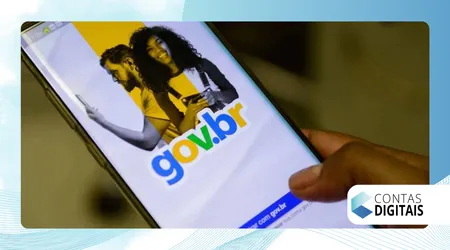
Learn to Use government apps without falling victim to digital scams. It is an indispensable skill for anyone seeking to access public services quickly and securely in 2026.
Technological advancements have brought us the convenience of resolving complex bureaucratic issues at our fingertips, but this same progress has opened up opportunities for criminals who refine their tactics daily.
It's no longer just about strange links; we're dealing with sophisticated social engineering that leverages institutional trust to divert resources and hijack identities.
In this guide, we will explore the layers of protection necessary to navigate the federal and state digital ecosystem, avoiding financial fraud and the theft of sensitive data by those who make cybercrime a business model.
Table of Contents
- The rise of digital public services and the real risks.
- What are the digital scams targeting users of government apps?
- How can you tell if a government app is official and secure?
- What are the main phishing tactics involving Gov.br?
- Why is two-factor authentication your best defense today?
- Comparative table of security on official channels.
- Active safety and a preventative approach.
- FAQ and final reflection.
What are the digital scams targeting users of government apps?
There's something unsettling about how cybercrimes have evolved. They perfectly mimic the interfaces of platforms like the FGTS (Brazilian severance pay fund) and the Digital Work Card, fooling even those who consider themselves "digital natives." It's a visual trap.
These scams often originate from urgent messages about irregularities in the CPF (Brazilian taxpayer ID) or promises of forgotten amounts.
The trigger is always emotional. Driven by fear or greed, the user clicks on links that install malicious software without leaving immediate traces.
Once this fake app takes up residence on the phone, the criminal gains access to your passwords and verification codes.
Financial loss is the obvious outcome, but the exposure of privacy is a much more lasting damage.
Modern social engineering is not just technical; it's psychological. It uses the weight of public authority to create a false sense of urgency, causing common sense to be overridden by the need to resolve a non-existent issue.
How can you tell if a government app is official and secure?
The first line of defense against fraud is to check the software's origin in official stores.
It seems basic, but the devil is in the details of the developer listed on the Google Play Store or Apple App Store.
Authentic federal applications are published exclusively by the "Government of Brazil" or entities such as "SERPRO".
If the developer has a generic name or a free contact email, you're facing a trap.
Be wary of any program that asks for PIX (Brazil's instant payment system) to "unlock benefits" or that requires login via social media.
Government systems are isolated islands; they don't use third-party bridges to validate who you are.
Technically analyzing who signs the code prevents you from installing pirated copies.
It's an exercise in attention that separates those who can... Use government apps without falling victim to digital scams. who ends up fueling the crime industry.
Read too: Childcare reimbursement: why the benefit has gained importance in jobs
What are the main phishing tactics involving Gov.br?
Phishing in 2026 is almost indistinguishable from reality. It mimics the official visual identity with surgical precision, but the secret to unmasking it usually lies in the address bar: official domains always end in ".gov.br".
Criminals have improved their use of artificial intelligence to eliminate grammatical errors that previously served as warning signs.
Today, the text is fluid, the tone is formal, and the threat of account blocking seems perfectly legitimate to the untrained eye.
The promise of early release of income tax refunds is the perfect bait during the first half of the year.
It's a numbers game: they fire off millions of messages hoping that a small percentage will bite the hook out of sheer anxiety.
To understand how your data should be protected by law, it is worth consulting the portal of National Data Protection Authority (ANPD), which acts as the sheriff of our Brazilian digital privacy.
Why is two-factor authentication your best defense today?
Enabling two-factor authentication when logging into Gov.br transforms your account into a fortress. It's the digital equivalent of having a door with two different locks, where the criminal only has the key to one.
Even if your master password is discovered in a database breach—something common these days—the intruder will be stopped. They don't have your face for biometric verification or the code sent to your device.
Security in 2026 no longer focuses solely on passwords, but on behavior. The system understands whether access originating from Europe is compatible with your usual usage profile, proactively blocking any unusual attempts.
Ignoring this extra layer is a costly mistake. Set your account levels to Silver or Gold; in addition to more features, this ensures that the State recognizes you with a much higher degree of certainty.
+ Secure Mobile App: see how the government app works
Security Comparison: Official Channels vs. Fraudulent Channels
This table organizes the chaos of digital information, allowing a direct comparison between the structure of a legitimate service and the improvisation (even if well-decorated) of a scam page.
| Feature | Official App/Portal | Fraudulent Channel (Scam) |
| Web Domain | It strictly ends in .gov.br | Use .with, .net, .org or .top |
| Developer | Government of Brazil / SERPRO / DATAPREV | Names of individuals or obscure acronyms |
| Password Request | Only in the encrypted login environment. | Requested via SMS, WhatsApp or email |
| Payments | Via official form (DARF/GRU/Document) | Exclusively via PIX for individuals (CPF) or companies. |
| Tone of Voice | Informative and procedural | Alarmist, urgent, and promising gains. |
Strategies for maintaining digital hygiene in public services
Keeping your smartphone's operating system updated is a critical step that many people ignore out of laziness.
These updates are not merely cosmetic; they close "holes" that allow silent spyware to intercept data.
Avoid public Wi-Fi networks when conducting sensitive transactions. If you need to check your FGTS balance or verify health information, use 5G.
Open networks are like loud conversations in a crowded square: anyone can hear.
Whenever you finish a consultation, log out. It's a simple habit that prevents access from remaining active if your device is stolen.
Digital security is made up of small rituals of discipline that prevent major tragedies.
The practice of Use government apps without falling victim to digital scams. It depends on a healthy distrust.
If the offer seems too good to be true or the problem seems too urgent, take a breath. The government doesn't rush; it follows slow and predictable processes.
+ Unified Registry Update 2026: Who needs to update their data?
The power of surveillance against cybercrime.
The digitalization of public services is an irreversible trend that has brought unprecedented ease.
However, it requires citizens to abandon passivity and take control of their own access credentials as if they were the keys to their house.
Educating oneself about protection tools and respecting security layers is the only way to fully exercise digital citizenship.
The state provides the tools, but the safekeeping of the password still belongs exclusively to the individual.
The government never requests data over the phone. If someone calls asking for a code sent via SMS, hang up.
Report attempted fraud through official Federal Police channels or the Ministry of Justice's website.
To understand the governance behind the Brazilian network, visit the website of CGI.br – Internet Steering Committee in Brazil This is the definitive reading on how safety standards are shaped in the country.
Frequently Asked Questions (FAQ)
How can I tell if I've been scammed using a government app?
Monitor your login history on your Gov.br account. If there are logins at unusual times or loan and withdrawal requests that you don't recognize, your account has been compromised and should be blocked immediately.
Does the government contact people via WhatsApp to offer benefits?
Not actively soliciting data. Although some city halls or government agencies have informational channels, they serve to send news, never to request passwords, tokens, or advance payments for the release of funds.
What should I do if I click on a suspicious link?
Don't panic, but act fast. Change your main passwords, uninstall recent apps, and enable two-step verification on all your social media and banking accounts. If the phone seems unstable, a factory reset is the safest option.
Is it safe to save my Gov.br password in my browser?
For highly sensitive accounts, it's best not to save them. If your computer or cell phone is accessed by third parties, they will have free access. Prefer to memorize passwords or use a password manager that requires biometrics to reveal the data.
